Professional SDI-Based Television Studio Infrastructure and Broadcast Signal Architecture
A professional TV studio is built around an SDI-based signal chain where multiple camera feeds are routed through a central video router like the Blackmagic Videohub and processed by a live production switcher such as the Blackmagic ATEM Television Studio. Audio is managed באמצעות a digital console like the Behringer X32, then synchronized and embedded into the video stream. The system includes converters for signal compatibility, dedicated recorders, multiview monitoring, and controlled lighting. All components are interconnected via SDI, XLR, and Ethernet infrastructure, ensuring low-latency, real-time production and reliable broadcast output.
AYBERK BLOG

A professional television studio infrastructure consists of tightly integrated video, audio, control, monitoring, and signal distribution systems designed for real-time production, recording, and broadcast delivery. The following is a technical breakdown of a modern SDI-based broadcast studio architecture.
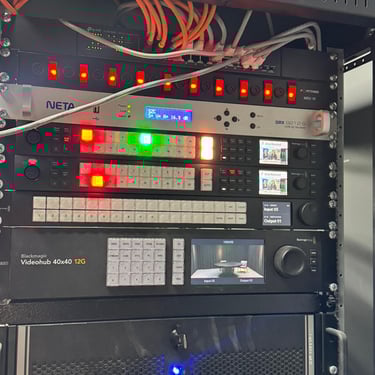
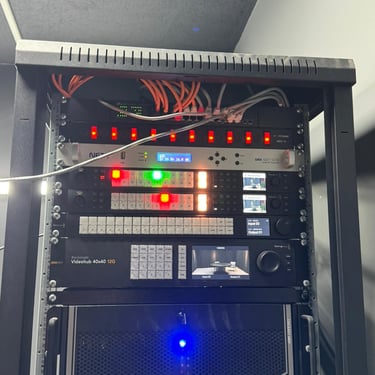
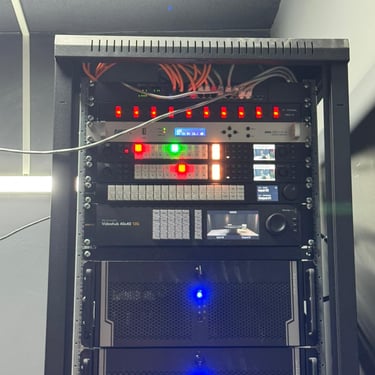
The video acquisition layer typically includes multiple broadcast-grade cameras (studio, ENG, or PTZ systems) operating over SDI. Camera outputs are transmitted via 3G-SDI, 6G-SDI, or 12G-SDI depending on the required resolution and frame rate. Each camera feed is routed into a centralized SDI router such as the Blackmagic Videohub, which functions as the core signal distribution matrix. This router enables dynamic crosspoint routing, allowing any input source to be assigned to any output destination with minimal latency.
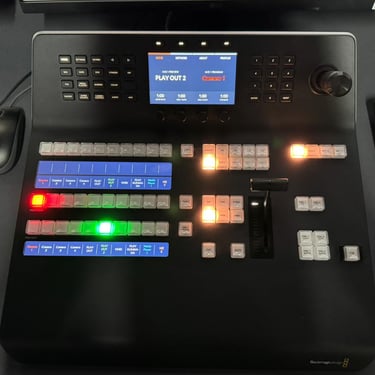
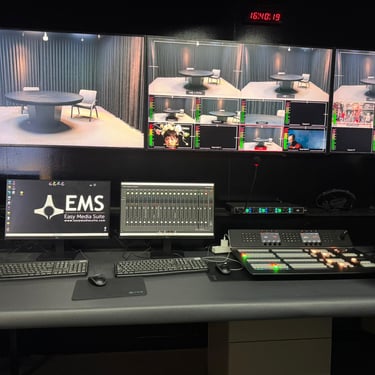
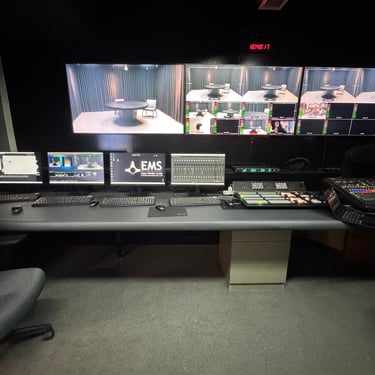
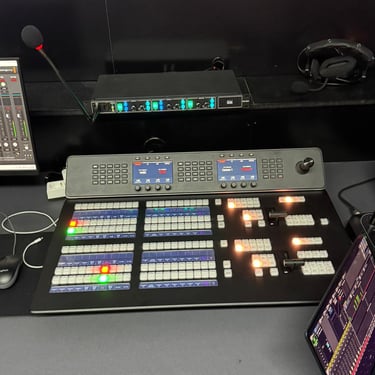
All camera feeds and auxiliary video sources are then directed into a live production switcher, typically a hardware-based system such as the Blackmagic ATEM Television Studio. The switcher performs real-time video mixing, including cut and transition operations, downstream and upstream keying (DSK/USK), chroma/luma keying, and multi-layer compositing. It also generates a multiview output for monitoring all sources simultaneously. The program (PGM) and preview (PVW) outputs are distributed via SDI for downstream processing and monitoring.
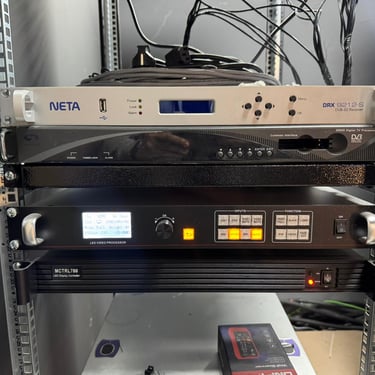
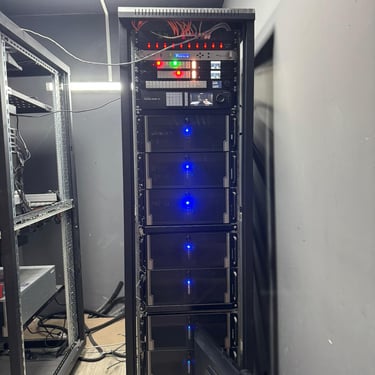
Signal normalization and format interoperability are handled through dedicated conversion hardware such as the Blackmagic Micro Converter SDI to HDMI and Blackmagic HDMI to SDI Converter. These devices ensure compatibility between consumer HDMI sources and professional SDI infrastructure while maintaining signal integrity.
For recording and playback, broadcast-grade digital recorders such as the Blackmagic HyperDeck Shuttle HD are deployed. These systems support ProRes and DNx codecs, enabling both program recording and ISO recording of individual camera feeds for post-production workflows.
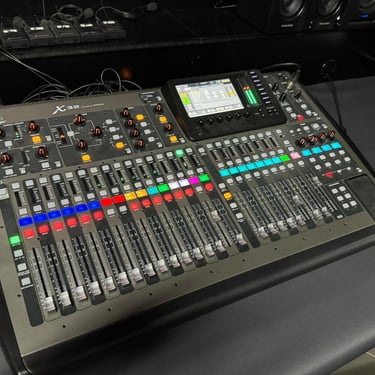
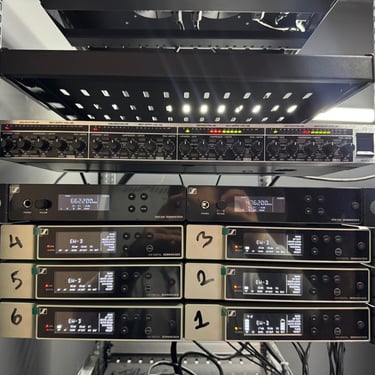
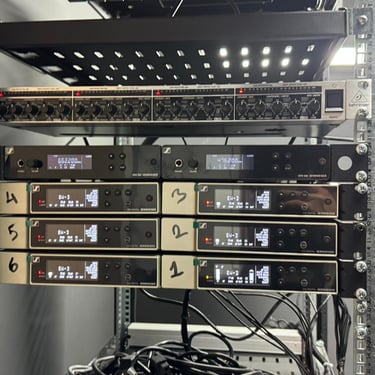
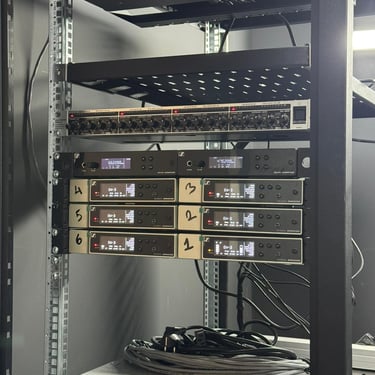
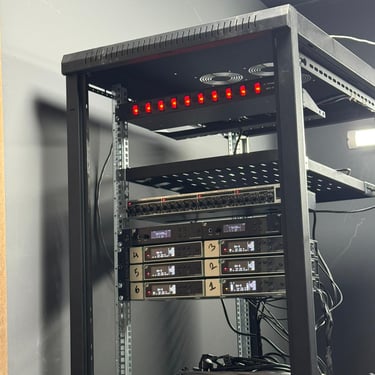
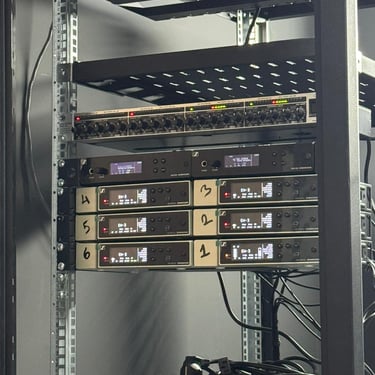
The audio subsystem is centered around a digital mixing console such as the Behringer X32. This console provides up to 32 mic/line inputs with programmable preamps, AES50 digital networking, and comprehensive DSP processing including EQ, dynamics, gating, and bus routing. Audio sources—such as lavalier microphones, shotgun microphones, and line-level feeds—are routed into the console either directly or via digital stageboxes (e.g., AES50-based expansion units). The final stereo or multichannel mix is embedded into the SDI signal via the switcher or transmitted separately for broadcast encoding.
Audio monitoring is achieved through near-field reference monitors and closed-back studio headphones, ensuring accurate signal evaluation during live production.
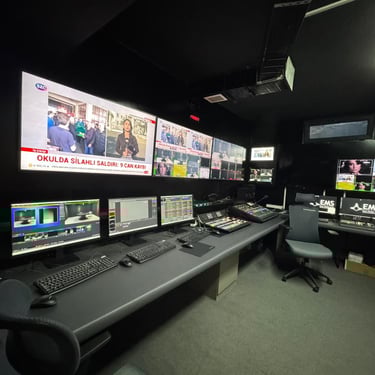
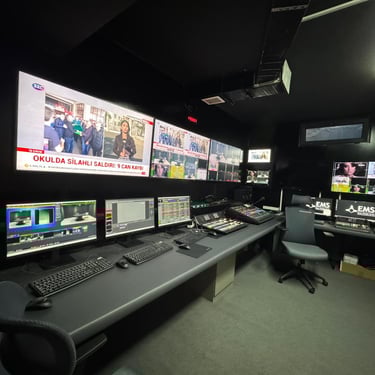
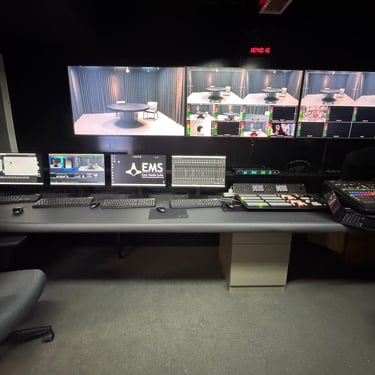
The monitoring system consists of multiple broadcast displays configured for multiview, program, and preview outputs. Multiview displays aggregate all input sources, audio meters, and status indicators into a single screen, typically driven by the switcher’s multiview output. Dedicated program monitors display the final output signal, ensuring quality control before transmission.
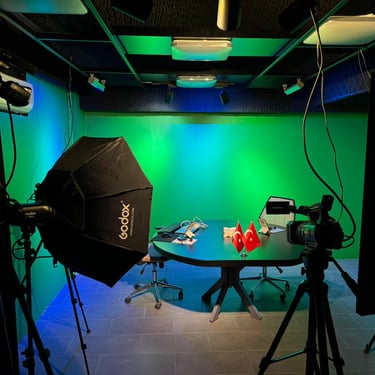
The lighting system is based on high-CRI LED panels, Fresnel fixtures, and soft light sources, often controlled via DMX512 protocol. Lighting control systems enable precise intensity, color temperature, and scene adjustments to maintain consistent exposure and color accuracy across all camera feeds.
The control and graphics layer includes a production workstation running real-time broadcast software such as OBS, vMix, or equivalent systems. This layer is responsible for character generation (CG), lower-thirds, overlays, and playback of media assets. Integration with the switcher is typically achieved via SDI inputs or network-based protocols.
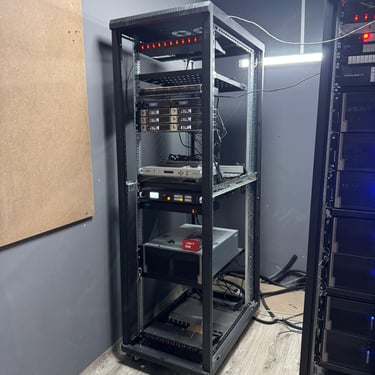
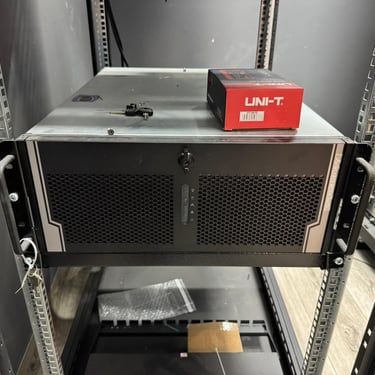
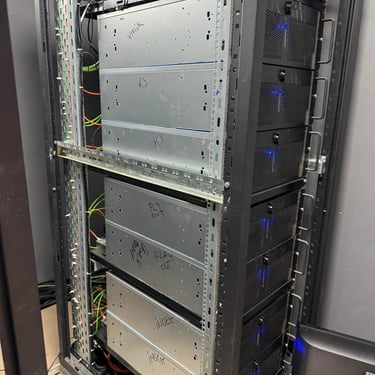
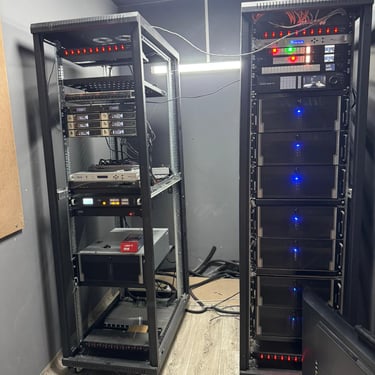
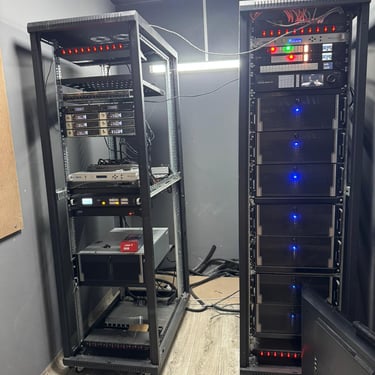
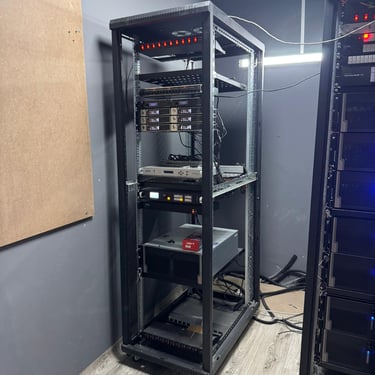
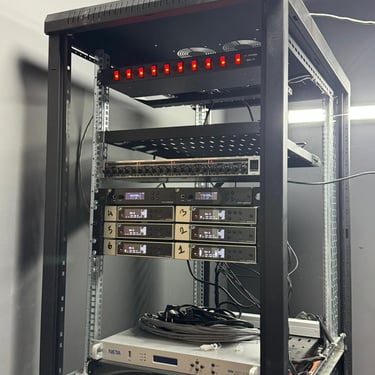
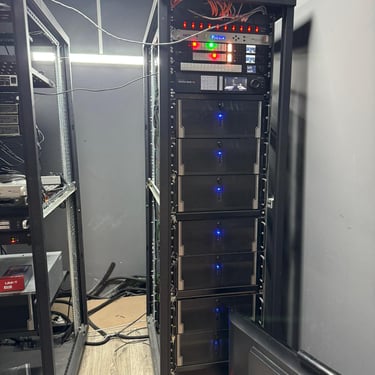
The infrastructure backbone consists of high-quality coaxial SDI cabling (BNC), balanced XLR audio cabling, and Ethernet networking for control and IP-based workflows. All hardware is mounted in standardized 19-inch rack enclosures for efficient space management and thermal control. Power continuity is maintained באמצעות UPS systems to prevent downtime during electrical failures.
In a typical signal flow, camera feeds are transmitted via SDI to the video router, routed to the production switcher, processed into a program output, and then distributed simultaneously to recording devices, monitoring systems, and streaming encoders. Audio signals follow a parallel path through the digital mixer and are embedded into the video signal prior to final output.