Technical Analysis and Internal Hardware Examination of the Omnia One Broadcast Audio Processor
A Technical Teardown and Hardware-Based Evaluation of the Omnia One Audio Processing Unit
AYBERK BLOG
The Omnia One is a professional broadcast audio processor designed for continuous operation in FM, AM, and digital radio environments. This document presents a technical description of the device based on a physical teardown and direct inspection of its internal hardware. The purpose of this text is to provide a clear, engineering-oriented explanation suitable for documentation, archiving, or technical publication, accompanied by internal photographs taken during disassembly.
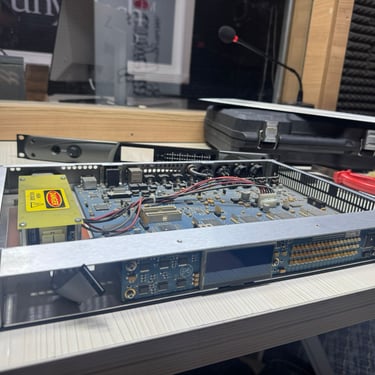
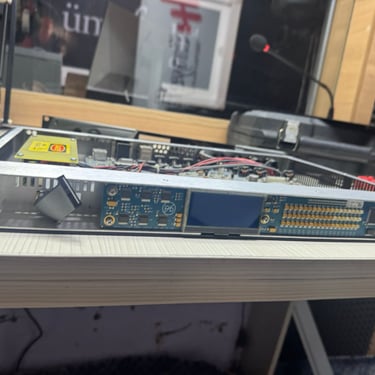
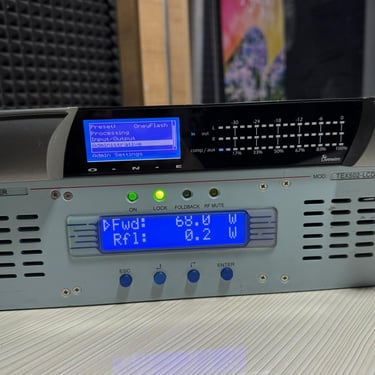
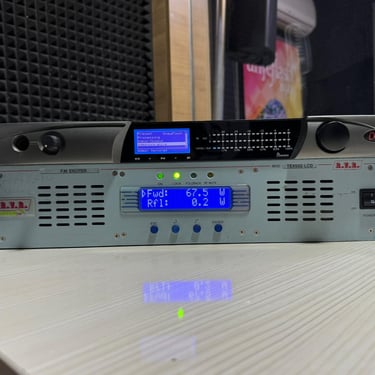
The device is built in a 1U rack-mount metal chassis designed to reduce electromagnetic interference and ensure mechanical rigidity. The enclosure is fully grounded and intended for installation in broadcast racks where RF noise and thermal stability are critical. The front panel consists of a graphic display, a rotary encoder, and control buttons used for local configuration, while all signal and power connections are located on the rear panel.
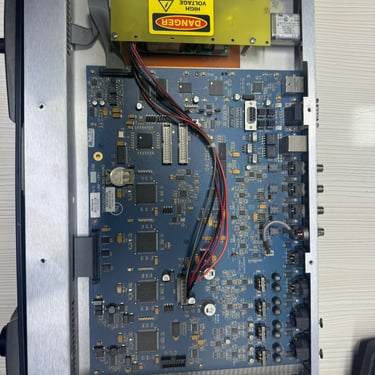
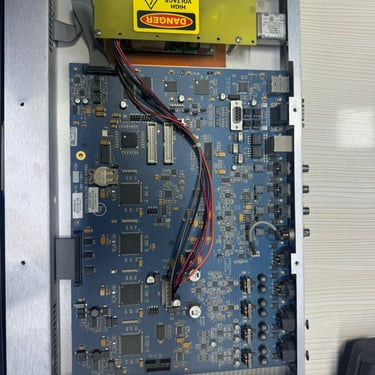
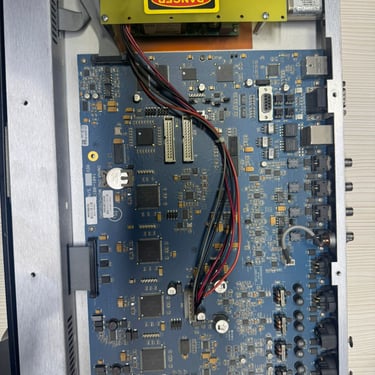
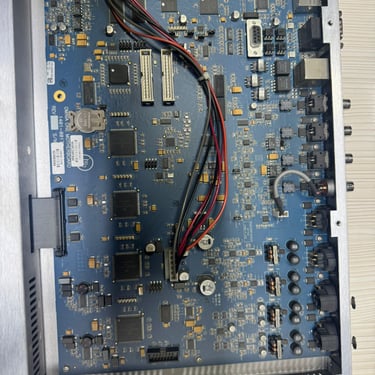
After removing the top cover, the internal layout of the Omnia One becomes clearly visible. The internal architecture is divided into distinct functional sections, including the power supply unit, the main processing board, and the audio input/output circuitry. This separation is intentional and helps minimize noise coupling between digital processing, analog audio paths, and power regulation stages.
The power supply is a switch-mode power supply designed to operate over a wide AC input range. It generates multiple regulated DC voltage rails required by the digital and analog sections of the device. Special attention has been given to filtering and isolation to prevent switching noise from contaminating the audio signal path. The power supply module is mechanically and electrically positioned to reduce interference with sensitive signal-processing components.
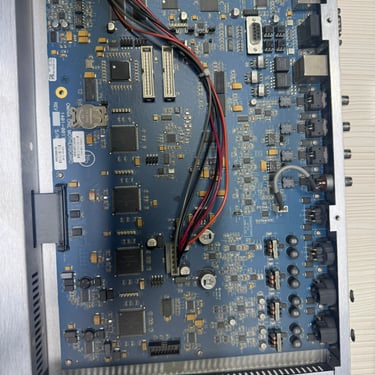
At the core of the Omnia One is the main processing board, which contains the digital signal processor responsible for all real-time audio processing tasks. This DSP executes multiband compression, automatic gain control, limiting, clipping, and stereo enhancement algorithms with very low latency. In addition to the DSP, the board includes a control processor that manages the user interface, display, preset handling, network communication, and system monitoring. Memory components such as RAM and flash storage are used for firmware, presets, and operational data.
The audio input and output section is implemented using high-quality analog and digital circuitry. Balanced analog inputs and outputs are handled through precision operational amplifiers and high-resolution analog-to-digital and digital-to-analog converters. Digital audio is supported through AES/EBU interfaces with proper clock recovery and signal isolation. The analog and digital audio paths are physically separated on the circuit boards to reduce crosstalk and maintain signal integrity.
Thermal management inside the Omnia One is achieved through a combination of passive cooling and controlled airflow. Heat-generating components such as processors and voltage regulators are fitted with heat sinks, and the internal layout allows air to move efficiently from front to rear. This design supports reliable 24/7 operation, which is essential in broadcast environments.
The firmware of the Omnia One is embedded and optimized for stability and deterministic behavior. Audio processing is preset-based, allowing engineers to select or customize processing profiles according to broadcast format and regulatory requirements. Network connectivity enables remote control, monitoring, and firmware updates through a web-based interface, making the device suitable for modern broadcast infrastructure.
From an engineering perspective, the Omnia One demonstrates a well-structured internal design focused on audio quality, reliability, and serviceability. The use of dedicated DSP hardware, careful power supply isolation, and clearly separated signal domains reflects its role as a critical component in the broadcast audio chain. When placed before the exciter in an FM transmission system, the device plays a decisive role in defining the final on-air sound while maintaining compliance with technical standards.
This document, together with the internal photographs obtained during disassembly, provides a comprehensive technical reference for the Omnia One audio processor.